
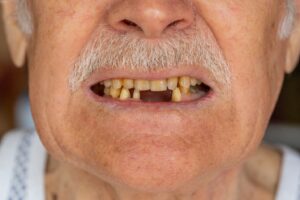
If you’re missing one or more teeth, replacing them can help restore your smile and make eating and speaking easier. Two common options are partial dentures and dental bridges. While both can fill gaps left by missing teeth, they work differently and may suit different patients. Let’s break down the differences between the two so you can have a more productive conversation with your dentist about which option fits your needs!
Consider How Many Teeth Are Missing
The number and location of missing teeth can influence your options. A dental bridge is commonly used to replace one or a small number of consecutive missing teeth. It uses neighboring teeth or, in some cases, dental implants for support.
A partial denture can replace multiple missing teeth in different areas of the mouth. It typically includes replacement teeth attached to a gum-colored base and may use clasps or other attachments to stay in place.
Think About Your Remaining Teeth
A traditional bridge generally relies on healthy neighboring teeth for support. Those teeth may need to be reshaped so the bridge can be placed over them.
A partial denture doesn’t necessarily require the same type of preparation, although it depends on the design and your individual dental condition. Your dentist will evaluate the health and strength of your remaining teeth before recommending either option.
Compare Convenience and Removability
One major difference is that a traditional bridge is fixed in place. You don’t remove it for regular daily activities, although you’ll need to clean carefully underneath and around the restoration.
A partial denture is removable. You can take it out for cleaning and typically remove it while sleeping, according to your dentist’s instructions. Some patients appreciate this flexibility, while others prefer the feel of a fixed restoration.
Consider Comfort and Appearance
Both options can be designed to look natural, but they may feel different. A bridge generally feels more like a fixed part of your smile, while a partial denture may take some time to get used to.
Your dentist can help you consider factors such as speech, chewing, appearance, and how much of the appliance will be visible when you smile.
Think About Cost and Maintenance
The initial cost of a partial denture or bridge can vary considerably depending on the materials used, the number of teeth being replaced, and any additional dental treatment you need.
It’s also important to consider long-term maintenance. A partial denture may require adjustments as your mouth changes, while a bridge may eventually need repair or replacement.
If you’re still unsure whether a partial denture or a bridge is right for you, go ahead and schedule a consultation with your dentist. Ask about the advantages, limitations, expected lifespan, maintenance requirements, and total cost of each option. With this information, you’ll be better equipped to decide which restoration best suits you.
About the Practice
Alpharetta Modern Dentistry offers several answers if you’re one of the approximately 178 million adults missing at least one tooth. Dental bridges, dentures, and dental implants are all on our menu, and our expert, lead dentists, Drs. Valeria Labastida and Ashish Kakadia, can let you preview your results before treatment with our virtual smile design. For a consultation, contact us online or by phone at (470) 282-5157.