
Dental Bridges – Alpharetta, GA
Replace Missing Teeth to Close the Gaps in Your Grin
Tooth loss can affect your daily life in several ways as once-simple tasks, such as eating and speaking, become more challenging. Not only that, but you might feel self-conscious about the spaces in your smile and worry about being judged for your looks.
Our team is happy to help replace missing teeth to close the gaps in your grin with a lifelike dental bridge. Continue reading to learn more about these restorations, who they can help, and how they work, so you know what to expect from this treatment.
Why Choose Alpharetta Modern Dentistry for Dental Bridges?
- Digital Impressions to Enhance Accuracy & Comfort
- Resilient, Customizable Tooth-Colored Materials
- Accept Insurance & Offer Flexible Financing
What Is a Dental Bridge?
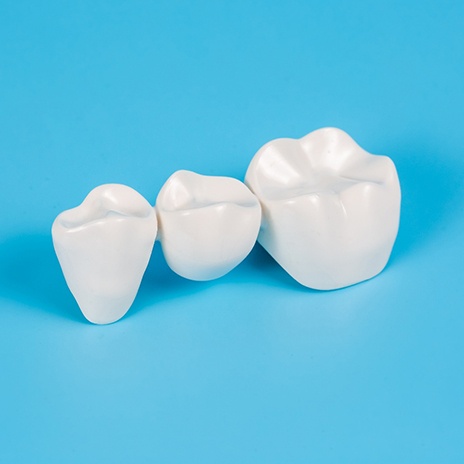
A dental bridge is an oral appliance that contains the required number of replacement teeth positioned between a dental crown on each end. They are usually made from resilient ceramic, such as porcelain, that can be crafted to match the size, color, and shape of your natural enamel for beautiful results that blend in seamlessly.
These prosthetics are cemented over healthy abutment teeth or specially placed implant posts on both sides of the gap in your grin to close the distance. They can be an ideal way to restore anywhere between 1 and 4 consecutively missing teeth, but the longer the bridge, the more unstable it can become.
Types of Dental Bridges
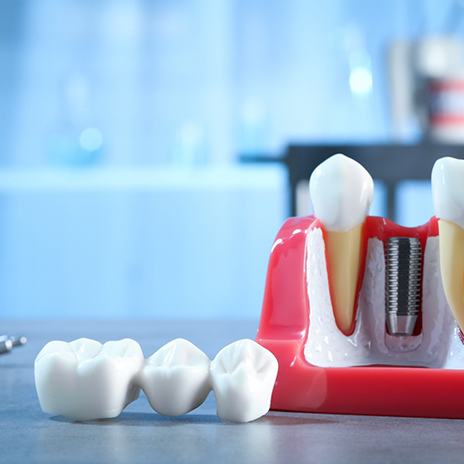
There are two types of dental bridges, and it’s normal to wonder which is the best option for you. Once our team has examined your mouth, we can recommend one of the following based on our findings:
Traditional Dental Bridge
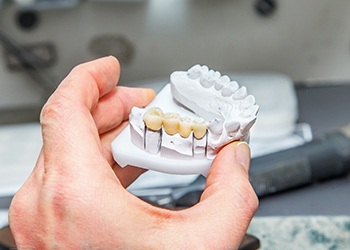
Traditional dental bridges require that you have sufficiently healthy teeth on both sides of the space in your smile to support your restoration. Our team will need to remove a small amount of enamel from these abutments to ensure that your prosthetic fits and functions correctly while avoiding potential complications, such as a misalignment. If you have developed more significant tooth decay, you might be a better candidate for an implant bridge.
Implant Bridge
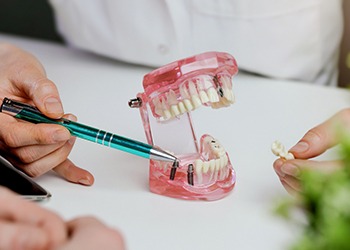
These restorations function similarly to traditional ones, but they anchor to dental implants placed on each end of the gap in your grin instead of relying on healthy abutment teeth. It can take several months to recover after the initial procedure because your mouth must generate enough new bone growth to fuse with these posts, but your replacement teeth are more firmly rooted and therefore less likely to become damaged, destabilized, or dislodged.
The Benefits of Getting a Dental Bridge
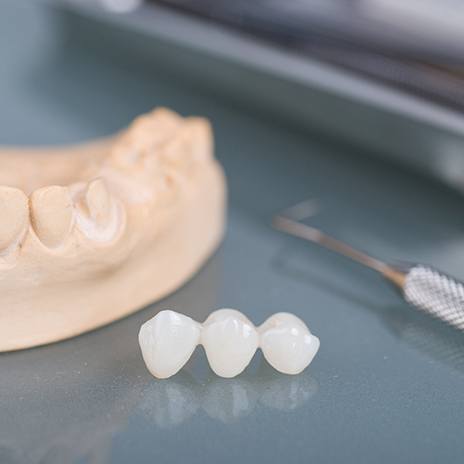
Rebuilding your smile with a lifelike dental bridge provides many advantages that help improve your dental health, general well-being, and daily quality of life, including:
- Lifelike materials. They’re created using tooth-colored materials that can be customized to resemble your natural teeth for beautiful results.
- Enhance your self-esteem. Restoring your arches can boost your confidence in your appearance, which can lead to better professional achievements and more meaningful relationships.
- Better bite force. Your new teeth return a portion of your original bite force so that you can enjoy a wider variety of wholesome ingredients to support your oral and overall health.
- Versatile treatment. This service can replace a single tooth or several that fell out in a row.
- Lasting results. These prosthetics can last between 5 and 15+ years, making this a durable, long-term solution.
Dental Bridge FAQs
Do Dental Bridges Feel Natural?
Within just a few days of receiving your permanent dental bridge, it should start to feel increasingly natural. Bridges are made from durable materials that can stand up to everyday chewing forces just as easily as tooth enamel, so eating with a dental bridge shouldn’t feel strange. Every bridge is customized based on impressions taken of the tooth, so it shouldn’t feel awkward or even noticeable.
How Soon Can You Get a Dental Bridge After a Tooth Extraction?
After a tooth extraction, your gums and jawbone need time to heal, so your dental bridge can’t be placed too soon. The duration of this healing process can vary based on the state of your oral health, but for most people, this takes between eight and twelve weeks. If you are getting a dental implant bridge, it might be possible to have the dental implants placed immediately after your extractions and restored with a temporary bridge during the healing process. During your consultation, we will be able to give you a more specific estimated timeline that applies to your case.
How Many Teeth Do Dental Bridges Replace?
Depending on your unique needs, a dental bridge can replace anywhere from one to four missing teeth in a row. However, in most cases, it is best to use bridges to replace only one or two teeth. The longer that a dental bridge extends, the less stable it becomes, so it can be risky to have a dental bridge replace three or more teeth. Implant bridges can lower this risk because they are just as strong and secure as natural teeth.
Is Getting a Dental Bridge Painful?
Before we prepare your teeth to support a dental bridge, we will start by numbing the area with a local anesthetic. After the preparation and placement of the dental bridge, the underlying teeth will likely feel sensitive for the next few days. Taking over-the-counter pain relievers is usually enough to help. Because dental bridges prevent the surrounding teeth from drifting out of place, they can actually prevent discomfort in the future caused by dental drift.
Can You Take Out Your Dental Bridge?
No, dental bridges cannot be taken out on their own. Dental bridges are designed to be fixed in the mouth for many years after being placed. Dental bridges can only be done by a dental professional. However, some healthcare providers refer to partial dentures as “removable bridges,” but this isn’t entirely accurate. Partials are similar to dental bridges, but one of the key differences is that partials can be removed by the patient at any time, while dental bridges cannot.